
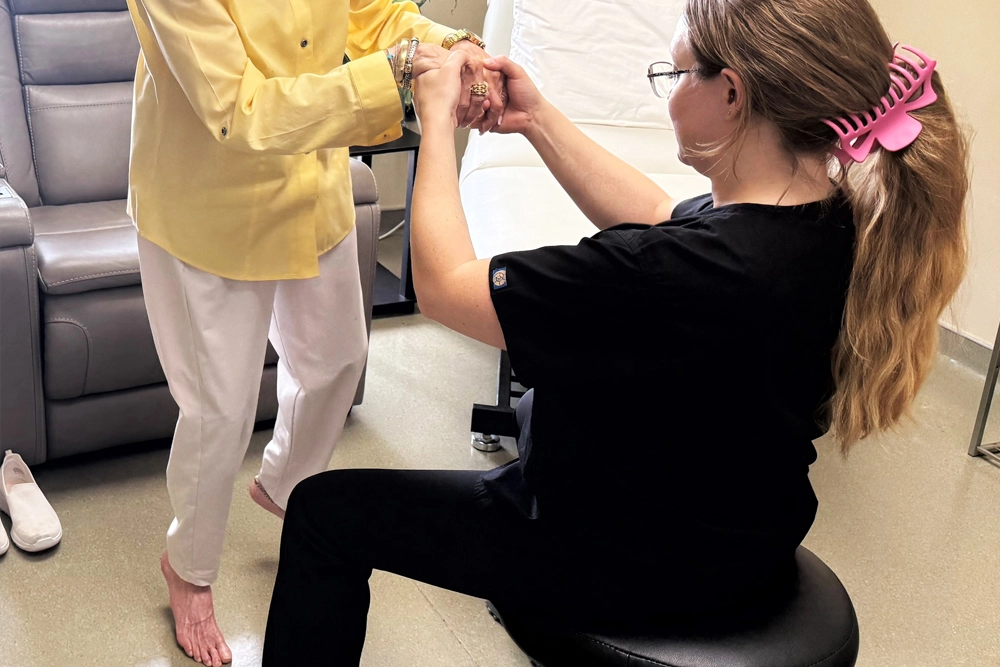
Numbness, tingling, and reduced sensation in the feet can make everyday activities more challenging, particularly when peripheral neuropathy affects balance and coordination. Gentle neuropathy exercises for feet, including ankle rotations, toe movements, and supported balance activities, may help maintain flexibility, muscle function, and mobility.
These exercises do not reverse nerve damage or eliminate the underlying cause of neuropathy. However, when selected appropriately, they can complement a broader management plan and help individuals maintain physical function.
At The Neuropathy & Healing Center, we recognize that neuropathy symptoms affect patients differently. Understanding which movements are appropriate, when modifications are necessary, and how to exercise safely is essential, particularly for individuals experiencing reduced foot sensation or chemotherapy-related nerve damage.
How Peripheral Neuropathy Affects Foot Mobility
Peripheral neuropathy develops when nerves outside the brain and spinal cord become damaged or function abnormally. These nerves help transmit sensory information and support muscle activity.
When neuropathy affects the feet, individuals may experience:
-
Numbness or reduced sensation in the toes and soles
-
Tingling, burning, or unusual sensations
-
Muscle weakness or difficulty controlling foot movements
-
Reduced awareness of foot position
-
Balance difficulties or an increased risk of falling
Symptoms vary according to the underlying cause, severity, and nerves involved.
Diabetes, certain chemotherapy medications, nutritional deficiencies, and other medical conditions can contribute to peripheral neuropathy.
Because neuropathy can affect both sensation and movement, exercise routines should account for individual limitations rather than follow a single standardized approach.
Benefits of Gentle Foot Exercises for Neuropathy
Appropriately selected exercises may support several aspects of physical function.
Maintaining Joint Flexibility
Gentle ankle and toe movements help maintain available joint range of motion. Regular movement may reduce stiffness associated with prolonged inactivity.
Supporting Muscle Strength
Exercises that activate the muscles of the feet and lower legs can help maintain strength and control. Stronger supporting muscles may contribute to improved stability during daily activities.
Improving Balance and Coordination
Peripheral neuropathy can interfere with the body's ability to recognize foot position. Balance exercises, when performed safely, may help individuals practice controlled movements and improve functional stability.
Supporting Everyday Mobility
Maintaining flexibility, strength, and coordination can make activities such as standing, walking, and changing positions more manageable.
These potential benefits depend on the individual's condition. Exercise should not be presented as a cure for neuropathy or a substitute for appropriate medical treatment.
Seven Gentle Neuropathy Exercises for Feet
The following exercises are general educational examples. Patients with significant numbness, weakness, balance impairment, active foot wounds, or other medical concerns should obtain individualized guidance before attempting them.
Begin with seated movements and progress only when appropriate. Stop any activity that causes pain, dizziness, increased weakness, or worsening symptoms.
1. Seated Ankle Circles
Ankle circles encourage gentle movement through the ankle joint and may help maintain flexibility.
How to perform:
-
Sit in a stable chair with your back supported.
-
Lift one foot slightly off the floor.
-
Slowly rotate your ankle in a comfortable circular motion.
-
Complete five circles in one direction.
-
Reverse the movement for another five circles.
-
Repeat with the opposite foot.
Keep the movement controlled and avoid forcing the ankle beyond a comfortable range.
2. Toe Raises and Toe Presses
This exercise activates muscles involved in controlling the toes and forefoot.
How to perform:
-
Sit with both feet resting flat on the floor.
-
Keep your heels in contact with the ground.
-
Gently lift your toes while keeping the rest of your feet stable.
-
Lower your toes slowly.
-
If comfortable, gently press your toes against the floor without curling them forcefully.
-
Repeat five to ten times.
Patients with reduced sensation should visually check foot positioning throughout the exercise.
3. Seated Heel Raises
Seated heel raises engage the calf muscles while limiting the balance demands associated with standing exercises.
How to perform:
-
Sit upright in a stable chair.
-
Place both feet flat on the floor.
-
Keep your toes in contact with the ground.
-
Slowly raise your heels.
-
Hold briefly, then lower your heels in a controlled manner.
-
Repeat five to ten times as tolerated.
Avoid placing excessive pressure on areas affected by pain, wounds, or skin irritation.
4. Ankle Pumps
Ankle pumps involve alternating between pointing the toes away from the body and drawing them upward.
How to perform:
-
Sit comfortably with one leg slightly extended.
-
Slowly point your toes forward.
-
Return to a neutral position.
-
Gently pull your toes toward your body.
-
Repeat five to ten times.
-
Switch to the other foot.
This exercise supports ankle movement and can be performed without standing.
5. Gentle Towel-Assisted Foot Stretch
A towel-assisted stretch may help maintain flexibility in the calf and surrounding tissues.
How to perform:
-
Sit on a stable surface with one leg comfortably extended.
-
Place a towel around the ball of your foot.
-
Hold both ends of the towel.
-
Gently draw the towel toward you until you feel a mild stretch.
-
Hold for approximately 10 to 15 seconds without bouncing.
-
Release and repeat on the opposite side.
Do not pull forcefully. Individuals with severe sensory loss may be unable to judge stretching intensity accurately and should seek professional guidance.
6. Seated Foot Slides
Foot slides encourage controlled lower-limb movement while maintaining support from a chair.
How to perform:
-
Sit in a stable chair with your feet on the floor.
-
Slowly slide one foot forward.
-
Bring the foot back toward its starting position.
-
Repeat five to ten times.
-
Perform the same movement with the opposite foot.
Keep your movements slow and maintain an upright seated posture.
7. Supported Weight Shifts
Supported weight shifts can help patients practice balance and controlled standing movements.
This exercise should only be attempted when standing is considered safe.
How to perform:
-
Stand at a sturdy countertop or another secure support.
-
Position your feet approximately hip-width apart.
-
Hold the support with both hands.
-
Slowly shift a small amount of weight toward one foot.
-
Return to the center.
-
Repeat toward the opposite side.
-
Continue for several controlled repetitions.
Individuals with significant balance impairment, frequent falls, or marked loss of sensation should perform standing exercises only with appropriate supervision.
Safety Precautions When Exercising With Neuropathy
Exercise safety is particularly important when peripheral neuropathy reduces the ability to detect pressure, discomfort, or injury.
Inspect Your Feet Before and After Exercise
Check for redness, blisters, swelling, cuts, or other changes. Patients with reduced sensation may not immediately recognize injuries.
Wear Appropriate Footwear
Supportive, properly fitted footwear may help protect the feet during standing and walking activities.
Avoid exercising barefoot when reduced sensation increases the risk of unnoticed injuries.
Use Stable Support
Perform seated exercises in a secure chair. For standing movements, use a stable support surface and obtain assistance when necessary.
Avoid Excessive Pressure or Stretching
Do not force joints beyond a comfortable range. Reduced sensation can make it difficult to recognize excessive pressure or tissue strain.
Monitor Changes in Symptoms
Stop exercising and seek clinical guidance if you experience worsening weakness, significant pain, new swelling, dizziness, or changes in balance.
Patients with active foot ulcers, serious circulation problems, recent injuries, or substantial neurological impairment should obtain medical clearance before beginning an exercise routine.
Neuropathy Exercises for Feet After Chemotherapy
Chemotherapy-induced peripheral neuropathy, commonly referred to as CIPN, can develop when certain cancer treatments affect peripheral nerves.
Symptoms may include numbness, tingling, burning sensations, weakness, and difficulties with balance or coordination.
For individuals experiencing neuropathy after chemotherapy, gentle exercise may help maintain physical function and support participation in everyday activities.
However, exercise recommendations should consider several important factors:
-
The severity of sensory loss or muscle weakness
-
Balance limitations and fall risk
-
Cancer treatment status and overall energy levels
-
Other medical conditions or treatment-related complications
-
Recommendations from the oncology care team
Patients receiving chemotherapy or recovering from cancer treatment should consult their oncology team before beginning or modifying an exercise program.
Exercise may support mobility, but it does not guarantee recovery from chemotherapy-related nerve damage.
For patients experiencing persistent symptoms, our chemo neuropathy treatment information provides additional context about nerve-related discomfort and available care considerations.
How Often Should You Perform Foot Exercises?
There is no single exercise schedule appropriate for every person with peripheral neuropathy.
Frequency depends on symptom severity, physical ability, medical history, and professional recommendations.
For some individuals, a short routine of gentle seated movements may be an appropriate starting point. Others may benefit from a structured rehabilitation program developed by a qualified clinician or physical therapist.
Rather than focusing exclusively on repetition counts, prioritize controlled movement, safety, and consistency.
A gradual approach allows patients to monitor how their feet respond and identify movements that may require modification.
When Foot Exercises Are Not Enough
Foot exercises may support mobility, but they do not address every cause of peripheral neuropathy.
Persistent or worsening symptoms may indicate a need for further evaluation, particularly when they interfere with walking, balance, sleep, or daily activities.
A clinical assessment may help identify potential contributing factors and determine whether additional medical care, rehabilitation, or other interventions are appropriate.
At The Neuropathy & Healing Center, we focus on understanding nerve-related symptoms and considering individualized, non-invasive care options where appropriate.
Patients should continue necessary treatment for underlying medical conditions, including diabetes or cancer-related complications.
New or rapidly worsening weakness, sudden changes in sensation, or significant difficulty walking warrant prompt medical assessment.
Frequently Asked Questions
Can foot exercises help peripheral neuropathy?
Appropriately selected exercises may help maintain flexibility, strength, balance, and mobility. However, exercise does not necessarily repair damaged nerves or eliminate the underlying cause of neuropathy.
What are the safest exercises for numb feet?
Gentle seated movements, such as ankle circles, ankle pumps, and controlled toe raises, may be suitable for some individuals because they place fewer demands on balance. Exercise selection should reflect the severity of sensory loss and other medical concerns.
Can walking help neuropathy in the feet?
Walking may support general physical function when it is safe and appropriate. Individuals with significant numbness, foot wounds, or balance problems should seek guidance before beginning a walking program.
Should patients with chemotherapy-induced neuropathy exercise?
Exercise may be appropriate for some patients experiencing chemotherapy-induced peripheral neuropathy. However, recommendations should be coordinated with the oncology care team, particularly during active cancer treatment.
Can neuropathy exercises improve balance?
Balance training may help some individuals improve functional stability. Patients at increased risk of falling should perform balance exercises under appropriate supervision.
Supporting Foot Mobility and Neuropathy Care in St. Augustine, FL
Maintaining foot mobility is an important consideration for individuals managing peripheral neuropathy. Gentle movement may help support flexibility and physical function, but an appropriate exercise plan should account for the underlying condition and individual limitations.
At The Neuropathy & Healing Center in St. Augustine, Florida, we provide individualized evaluations and non-invasive treatment options for patients experiencing nerve-related discomfort.
If you are experiencing persistent numbness, tingling, or mobility difficulties following chemotherapy, our team can discuss relevant care considerations and available treatment options.
Contact us at (904) 217-0542 or visit our Chemo Neuropathy Pain treatment page to explore the next steps in evaluating your symptoms.
Request a consultation
Let’s find out whether we can help.
Send us a note and a member of our team will follow up. Prefer to talk it through now? Call us and we’ll walk you through the first step.