
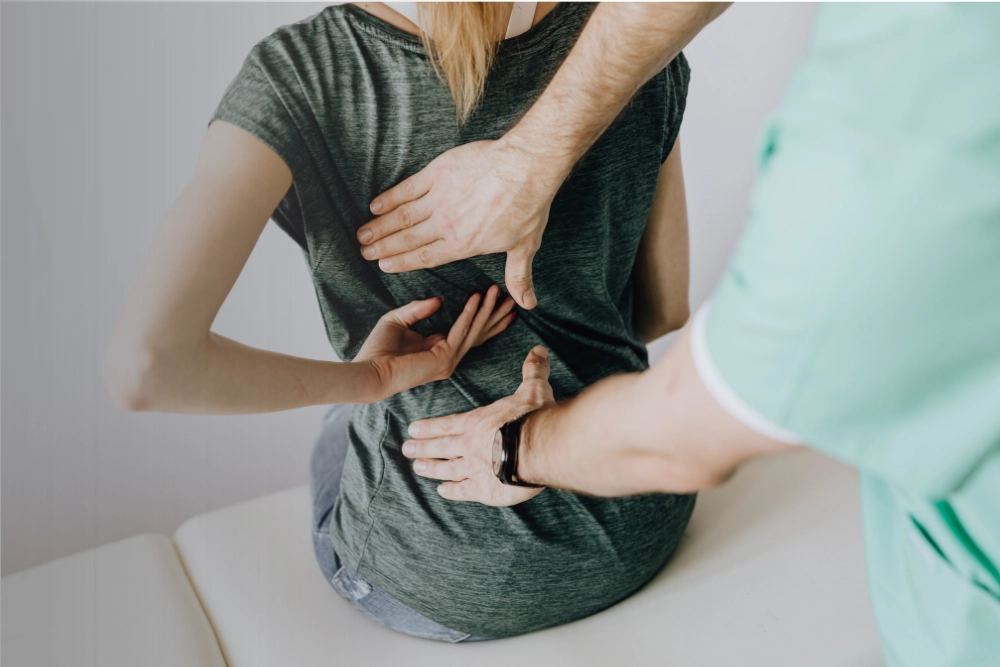
Lower back pain when standing can interfere with daily activities, occupational responsibilities, and overall mobility. This discomfort may develop from muscular fatigue, prolonged standing, spinal joint irritation, or underlying conditions affecting the lumbar spine and surrounding nerves.
The severity, location, and duration of symptoms can provide valuable information about potential contributing factors. Understanding the common causes of standing-related lower back pain, available management strategies, and indications for clinical evaluation can help patients make informed decisions about their spinal health.
Why Does Lower Back Pain Occur When Standing?
Standing requires continuous coordination among the muscles, joints, and supporting structures of the lumbar spine. These structures maintain spinal stability, support body weight, and facilitate upright posture.
When muscular endurance is reduced or an underlying spinal condition is present, prolonged standing may increase physical strain and contribute to discomfort.
Common contributing factors include muscular fatigue, repetitive physical activity, prolonged static positioning, and degenerative changes affecting spinal structures.
Some patients experience discomfort after standing for extended periods, while others develop symptoms immediately upon standing or transitioning from a seated position.
Evaluating the timing, location, and characteristics of these symptoms can help identify potential causes and guide appropriate clinical assessment.
Common Causes of Lower Back Pain When Standing
1. Muscle Fatigue and Strain
The muscles supporting the lumbar spine remain active throughout standing activities. Maintaining a stationary position for extended periods may contribute to muscular fatigue, particularly when endurance or conditioning is limited.
Muscle strain may also result from repetitive lifting, sudden movements, or excessive physical exertion.
Common symptoms include localized discomfort, muscular stiffness, and pain that becomes more noticeable during certain movements.
2. Prolonged Standing and Static Posture
Extended periods of standing can place sustained physical demands on the lower back.
Individuals whose occupations require prolonged standing may experience discomfort associated with limited movement, muscular fatigue, or uneven weight distribution.
Although posture influences how physical demands are distributed throughout the body, no single standing position can prevent every occurrence of lower back pain.
Regular movement, position changes, and comfortable body alignment may help reduce prolonged muscular strain.
3. Lumbar Spinal Stenosis
Lumbar spinal stenosis develops when spaces within the lower spinal canal become narrowed, potentially placing pressure on nearby nerves.
Patients may experience discomfort in the lower back, buttocks, or legs, particularly during standing or walking.
Symptoms may improve when sitting or leaning forward.
However, these symptoms are not exclusive to spinal stenosis. A comprehensive clinical evaluation is necessary to distinguish this condition from other potential causes of lower back discomfort.
4. Degenerative Changes in the Spine
Age-related changes can affect the intervertebral discs, spinal joints, and surrounding supporting structures.
In some individuals, these changes may contribute to discomfort during prolonged standing or physical movement.
However, degenerative findings are also common among individuals who do not experience back pain. Imaging findings must therefore be evaluated alongside symptoms, medical history, and clinical examination results.
5. Sciatica and Nerve Irritation
Sciatica refers to symptoms associated with irritation or compression of nerve roots contributing to the sciatic nerve.
Discomfort may extend from the lower back into the buttocks or legs and may occur alongside tingling, numbness, or muscular weakness.
Standing can aggravate symptoms in certain cases, although the presentation varies depending on the underlying condition.
Persistent radiating pain or neurological changes should be evaluated to determine whether nerve involvement is present.
6. Reduced Muscular Endurance and Physical Conditioning
The abdominal, lumbar, hip, and pelvic muscles contribute to spinal stability and movement control.
Reduced muscular strength or endurance may increase the physical demands associated with prolonged standing.
Appropriately selected strengthening and mobility exercises may help improve functional capacity. However, exercise recommendations should reflect individual health conditions, physical limitations, and clinical findings.
Lower Back Pain When Standing but Not Sitting
Some patients experience lower back discomfort primarily while standing, with noticeable improvement after sitting.
This symptom pattern may occur when upright positioning places additional demands on specific spinal structures or nerves.
For example, lumbar spinal stenosis may produce symptoms that worsen during standing or walking and improve with sitting or forward bending.
Other musculoskeletal and spinal conditions can produce similar symptoms.
Because position-dependent discomfort can have several underlying causes, symptom patterns alone are insufficient to establish a diagnosis.
Professional evaluation may be appropriate when symptoms persist, recur frequently, or extend into the lower extremities.
Practical Strategies for Managing Lower Back Pain From Standing
Effective management depends on the underlying cause of discomfort. However, several conservative strategies may help individuals experiencing mild, uncomplicated lower back pain.
Incorporate Regular Position Changes
Remaining in a stationary position for extended periods can increase muscular demands.
Short movement breaks, brief periods of walking, or alternating between sitting and standing may help reduce sustained physical strain.
Maintain Comfortable Body Alignment
Distributing body weight comfortably between both feet may help support a more sustainable standing position.
Patients should avoid forcing the spine into exaggerated positions or maintaining unnecessary muscular tension.
Evaluate Workplace Ergonomics
Workstation configuration, footwear, and opportunities for movement may influence comfort during prolonged standing.
Adjusting frequently used work surfaces to an appropriate height and incorporating regular movement breaks may help reduce unnecessary physical demands.
Consider Gentle Mobility Activities
Comfortable walking and controlled mobility exercises may help maintain flexibility and reduce stiffness in some individuals.
Activities should remain within a tolerable range and should not aggravate neurological symptoms.
Use Heat or Cold Applications When Appropriate
Heat may provide temporary relief for certain types of muscular discomfort, while cold applications may be appropriate for selected acute symptoms.
Protective measures are necessary to prevent skin injury, particularly among patients experiencing reduced sensation.
Obtain Evaluation for Persistent Symptoms
Although conservative self-management may be appropriate for mild discomfort, persistent or worsening symptoms require further consideration.
Clinical evaluation can help identify potential contributing factors and determine whether additional assessment or treatment is necessary.
Gentle Exercises to Support Lower Back Mobility
Appropriate physical activity may help maintain spinal flexibility, muscular function, and everyday mobility.
The following exercises are general examples intended for individuals with mild, uncomplicated discomfort. Patients with significant spinal conditions, neurological symptoms, recent injuries, or other medical concerns should obtain individualized guidance before beginning an exercise routine.
Pelvic Tilts
Pelvic tilts encourage controlled movement of the pelvis and lumbar spine.
-
Lie on your back with your knees bent and feet supported.
-
Gently engage your abdominal muscles.
-
Slowly flatten your lower back toward the supporting surface.
-
Hold briefly before returning to a comfortable neutral position.
-
Repeat several times without forcing the movement.
Movements should remain controlled and comfortable.
Gentle Knee-to-Chest Stretch
This exercise may help maintain flexibility in the lower back and surrounding muscles.
-
Lie on your back with both knees bent.
-
Slowly bring one knee toward your chest.
-
Hold briefly without applying excessive force.
-
Return the leg to its starting position.
-
Repeat with the opposite leg.
Discontinue the exercise if discomfort increases or symptoms begin extending farther into the leg.
Short Walking Intervals
Brief periods of comfortable walking may help reduce stiffness associated with inactivity.
However, walking may aggravate symptoms associated with certain spinal conditions, including lumbar spinal stenosis.
Patients whose symptoms worsen during walking or improve primarily with sitting or forward bending should seek clinical guidance before increasing activity.
When to Seek Professional Evaluation
Lower back discomfort may improve with conservative management, but certain symptoms warrant professional assessment.
Consider scheduling a clinical evaluation when:
-
Lower back pain persists or frequently returns.
-
Standing or walking becomes increasingly difficult.
-
Discomfort extends into the buttocks or lower extremities.
-
Tingling, numbness, or muscular weakness develops.
-
Symptoms interfere with occupational responsibilities, sleep, or everyday activities.
Emergency medical evaluation is necessary when back pain occurs alongside new bowel or bladder dysfunction, numbness in the groin or saddle region, or severe or rapidly progressive leg weakness.
Back pain accompanied by fever, significant trauma, or other concerning symptoms may also require prompt medical attention.
The Role of Chiropractic Treatment in Lower Back Pain Management
Chiropractic treatment may be considered as part of a conservative management approach for certain types of mechanical lower back pain.
Depending on the patient's diagnosis, medical history, and clinical findings, treatment may involve manual techniques, movement recommendations, and other non-surgical interventions.
Certain clinical guidelines recognize spinal manipulation as a potential treatment option for selected patients with uncomplicated lower back pain.
However, chiropractic treatment is not appropriate for every spinal condition. Patients with suspected nerve compression, significant neurological deficits, fractures, infections, or other serious conditions may require additional medical evaluation or alternative interventions.
At The Neuropathy & Healing Center, we emphasize individualized assessment and the consideration of non-invasive treatment options based on each patient's clinical needs.
Our chiropractic treatment services provide additional information about available care options at our St. Augustine clinic.
Frequently Asked Questions
Why does my lower back hurt after standing for an extended period?
Prolonged standing may contribute to muscular fatigue and sustained physical demands on the lumbar spine. Other possible causes include spinal joint irritation, reduced muscular endurance, or underlying spinal conditions.
Why does lower back pain improve when sitting?
Certain spinal conditions, including lumbar spinal stenosis, may cause symptoms that worsen during standing and improve with sitting. However, this pattern can have several causes and requires clinical assessment for an accurate diagnosis.
Can poor posture contribute to lower back pain when standing?
Prolonged or uncomfortable positioning may contribute to muscular fatigue and discomfort. However, lower back pain is influenced by multiple factors, and no single posture explains every case.
Can chiropractic treatment help manage lower back pain?
Chiropractic treatment may provide relief for selected patients with uncomplicated mechanical lower back pain. Treatment suitability depends on the underlying diagnosis, medical history, and clinical examination findings.
When does lower back pain require urgent medical attention?
New bowel or bladder dysfunction, saddle numbness, or severe progressive weakness requires emergency medical evaluation. Persistent discomfort accompanied by fever, significant trauma, or neurological changes may also require prompt medical assessment.
Lower Back Pain Evaluation in St. Augustine, FL
Persistent lower back pain can affect mobility, occupational performance, and overall quality of life. Identifying potential contributing factors is an essential step toward determining an appropriate management strategy.
At The Neuropathy & Healing Center in St. Augustine, Florida, we provide individualized evaluations and non-invasive treatment options for patients experiencing spinal and nerve-related discomfort.
Our approach emphasizes understanding each patient's symptoms, assessing relevant clinical factors, and discussing treatment options appropriate to their individual circumstances.
If lower back pain when standing is affecting your daily activities, contact our office at (904) 217-0542 or visit our Chiropractic Treatment page to explore available care options.
Request a consultation
Let’s find out whether we can help.
Send us a note and a member of our team will follow up. Prefer to talk it through now? Call us and we’ll walk you through the first step.