Class IV laser therapy offers a non-invasive approach that may support pain management, help regulate inflammation, and promote tissue recovery. For individuals experiencing persistent discomfort or mobility limitations, this technology represents a potential treatment option that can be evaluated as part of a comprehensive care plan.
The effectiveness of Class IV laser therapy varies according to the underlying condition, treatment protocol, and individual health factors. Understanding its potential benefits, clinical applications, and safety considerations can help patients make informed decisions about their care.
How Class IV Laser Therapy Works
Class IV laser therapy uses concentrated therapeutic light directed toward targeted areas of the body. The treatment involves a process known as photobiomodulation, in which specific wavelengths of light interact with cellular components and may influence biological processes associated with inflammation and tissue repair.
The Class IV designation refers to the laser's safety classification rather than its clinical effectiveness. These devices can deliver higher power levels than many lower-class therapeutic lasers, making appropriate treatment parameters and protective measures essential.
Unlike surgical lasers used to cut or remove tissue, therapeutic laser applications are designed to influence biological activity without requiring surgical incisions.
Five Potential Class IV Laser Therapy Benefits
1. Supporting Pain Management
Pain management is one of the primary reasons patients consider Class IV laser therapy. The treatment has been investigated for its potential to address discomfort associated with certain musculoskeletal and nerve-related conditions.
Photobiomodulation may influence inflammatory signaling and other biological mechanisms involved in pain perception. Clinical research has demonstrated potential improvements in pain outcomes for selected conditions, although findings vary across diagnoses and treatment protocols.
Class IV laser therapy should be considered a potential component of a comprehensive pain management strategy rather than a guaranteed solution.
2. Helping Manage Inflammation
Inflammation is a natural biological response to injury or tissue irritation. However, persistent inflammation may contribute to ongoing discomfort, stiffness, and reduced physical function.
Research indicates that photobiomodulation may influence certain inflammatory pathways. The extent of these effects depends on the condition being treated, and individual responses may vary.
A thorough clinical evaluation remains essential because inflammation can arise from different underlying conditions that require specific treatment approaches.
3. Supporting Tissue Recovery
Class IV laser therapy has been studied for its potential influence on cellular processes associated with tissue repair and recovery.
Therapeutic light may affect cellular activity, including mechanisms related to energy production and tissue maintenance. These findings have encouraged research into photobiomodulation for soft tissue injuries and other recovery-related applications.
However, laboratory findings do not necessarily establish that treatment will accelerate healing in every clinical situation.
Recovery outcomes are influenced by multiple factors, including injury severity, underlying health conditions, physical activity, and adherence to recommended treatment plans.
4. Supporting Mobility and Physical Function
Persistent pain and stiffness can interfere with daily activities, including walking, standing, bending, and participating in physical exercise.
When treatment contributes to improved comfort, some patients may find it easier to participate in rehabilitation activities and maintain their normal routines.
Improvements in mobility depend on the underlying condition and individual response. Identifying the cause of restricted movement remains an important part of determining appropriate care.
5. Providing a Non-Invasive Treatment Option
One of the distinguishing characteristics of Class IV laser therapy is its non-invasive application.
Treatment generally does not require surgical incisions, injections, or anesthesia. Sessions are typically performed in a clinical environment using specialized laser equipment directed toward the designated treatment area.
Although the procedure is non-invasive, appropriate safety measures remain necessary. Proper treatment settings, patient screening, and protective eyewear are essential components of responsible laser therapy administration.
Class IV Laser Therapy for Neuropathy and Nerve Pain
Peripheral neuropathy may cause symptoms such as tingling, burning sensations, numbness, and persistent discomfort, particularly in the hands and feet.
Photobiomodulation has been investigated as a potential supportive treatment for certain neuropathic conditions, including diabetic peripheral neuropathy.
Some clinical studies have reported improvements in pain and related symptoms. However, available evidence remains limited, and treatment outcomes vary depending on the condition and clinical protocol.
Symptom improvement should not be interpreted as confirmation that damaged nerves have regenerated or that the underlying cause of neuropathy has been resolved.
At The Neuropathy & Healing Center, we emphasize the importance of identifying potential causes of nerve-related symptoms before recommending treatment options.
Our approach to Class IV laser therapy focuses on evaluating whether the treatment may be appropriate within an individualized care plan.
Patients experiencing diabetic neuropathy, chemotherapy-related neuropathy, or other persistent nerve symptoms should continue receiving appropriate medical care for their underlying conditions.
Conditions That May Be Evaluated for Laser Therapy
Depending on the patient's diagnosis, medical history, and clinical findings, Dr. Solana may evaluate whether therapeutic laser treatment is appropriate for certain conditions, including:
-
Selected muscle and joint pain conditions
-
Soft tissue discomfort
-
Certain inflammatory musculoskeletal conditions
-
Chronic pain presentations
-
Specific neuropathic symptoms
These conditions represent areas of clinical application or investigation. They do not indicate that Class IV laser therapy has established effectiveness for every condition listed.
For example, symptoms associated with spinal nerve compression may require a different treatment approach from those associated with diabetic peripheral neuropathy.
A comprehensive assessment helps determine whether laser therapy is suitable or whether alternative interventions should be considered.
What to Expect During a Class IV Laser Therapy Session
The treatment experience varies according to the equipment, targeted area, clinical findings, and recommended protocol.
Initial Evaluation
Before treatment begins, Dr. Solana may review the patient's symptoms, relevant medical history, and potential contraindications.
This assessment helps determine whether Class IV laser therapy is appropriate and whether additional medical evaluation may be necessary.
Treatment Application
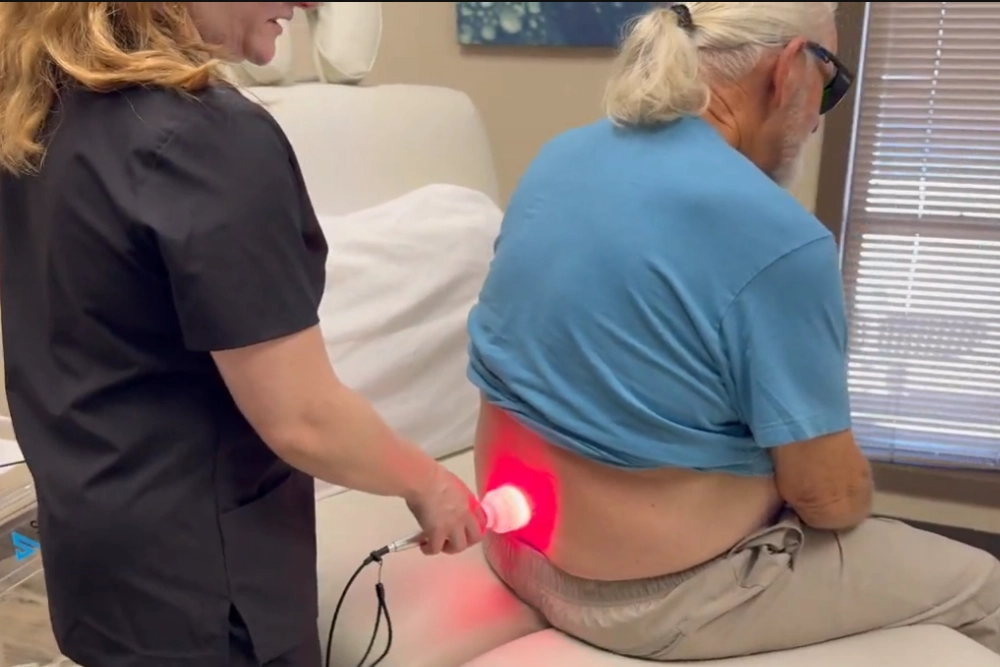
During treatment, therapeutic light is directed toward the selected area using specialized laser equipment.
Appropriate protective eyewear is required to maintain laser safety. Some patients may experience a warming sensation during the procedure, although the sensation varies according to the device and treatment settings.
The procedure should not produce burning sensations or significant discomfort.
Treatment Frequency and Progress
The recommended number of sessions depends on the patient's condition, clinical response, and treatment objectives.
Some individuals may notice changes during a course of treatment, while others may experience limited or no improvement.
There is no universally effective treatment schedule applicable to every diagnosis.
Progress should be assessed through clinically meaningful changes in symptoms, comfort, mobility, and daily function.
Safety Considerations and Possible Side Effects
Although Class IV laser therapy is non-invasive, appropriate administration is necessary to minimize potential risks.
Class IV laser devices can present eye and skin hazards when used incorrectly. Safe treatment requires suitable device settings, protective eyewear, appropriate patient screening, and proper clinical procedures.
Potential adverse effects may include temporary discomfort, excessive warmth, or skin injury resulting from improper application.
Before treatment, patients should disclose relevant medical conditions, medications, pregnancy status, and concerns involving the intended treatment area.
Individuals experiencing progressive weakness, worsening numbness, significant neurological changes, or other concerning symptoms should seek appropriate medical evaluation rather than delaying necessary care.
Choosing an Appropriate Pain Management Approach
The potential benefits of Class IV laser therapy should be evaluated in relation to the patient's symptoms, diagnosis, and overall health.
Different conditions may require different treatment strategies. For example, peripheral neuropathy and spinal nerve compression can produce overlapping symptoms but may involve distinct underlying mechanisms.
In certain cases, additional medical management, rehabilitation, or other treatment approaches may be necessary.
At The Neuropathy & Healing Center in St. Augustine, Florida, our approach emphasizes individualized evaluations and non-invasive treatment options for patients experiencing nerve-related discomfort and mobility concerns.
Our objective is to help patients understand available treatment options and make informed decisions based on their clinical needs.
Frequently Asked Questions
Is Class IV laser therapy painful?
Class IV laser therapy is generally intended to be comfortable. Some patients experience mild warmth during treatment. Any excessive heat, burning sensation, or significant discomfort should be reported immediately.
How long does it take to experience Class IV laser therapy benefits?
Treatment responses vary depending on the diagnosis, clinical protocol, and individual health factors. Some patients may report changes during treatment, while others may not experience significant improvement. Dr. Solana can discuss appropriate expectations based on the patient's evaluation.
Can Class IV laser therapy help with chronic nerve pain?
Photobiomodulation has been investigated for certain neuropathic pain conditions, with some studies reporting encouraging findings. However, current evidence does not establish consistent effectiveness across all forms of chronic nerve pain.
Is Class IV laser therapy the same as cold laser therapy?
Both treatments may involve photobiomodulation, but devices differ in laser classification, power output, and treatment parameters. Higher power does not necessarily indicate greater clinical effectiveness.
Can Class IV laser therapy replace medication or surgery?
Class IV laser therapy is not necessarily a substitute for medication, surgery, or other medically indicated treatments. Its suitability depends on the patient's diagnosis and clinical circumstances. Patients should consult their treating medical provider before changing prescribed treatment plans.
Explore Class IV Laser Therapy in St. Augustine, FL
Persistent pain, nerve-related discomfort, and mobility limitations can interfere with daily activities and overall quality of life. Identifying potential causes and understanding available treatment options are important steps toward developing an appropriate care plan.
At The Neuropathy & Healing Center, we provide individualized evaluations and non-invasive treatment options, including Class IV laser therapy, for patients in St. Augustine, Florida, and surrounding communities.
To discuss whether Class IV laser therapy may be appropriate for your condition, contact our office at (904) 217-0542 or visit our Class IV Laser Therapy treatment page.
Request a consultation
Let’s find out whether we can help.
Send us a note and a member of our team will follow up. Prefer to talk it through now? Call us and we’ll walk you through the first step.